The Chorus
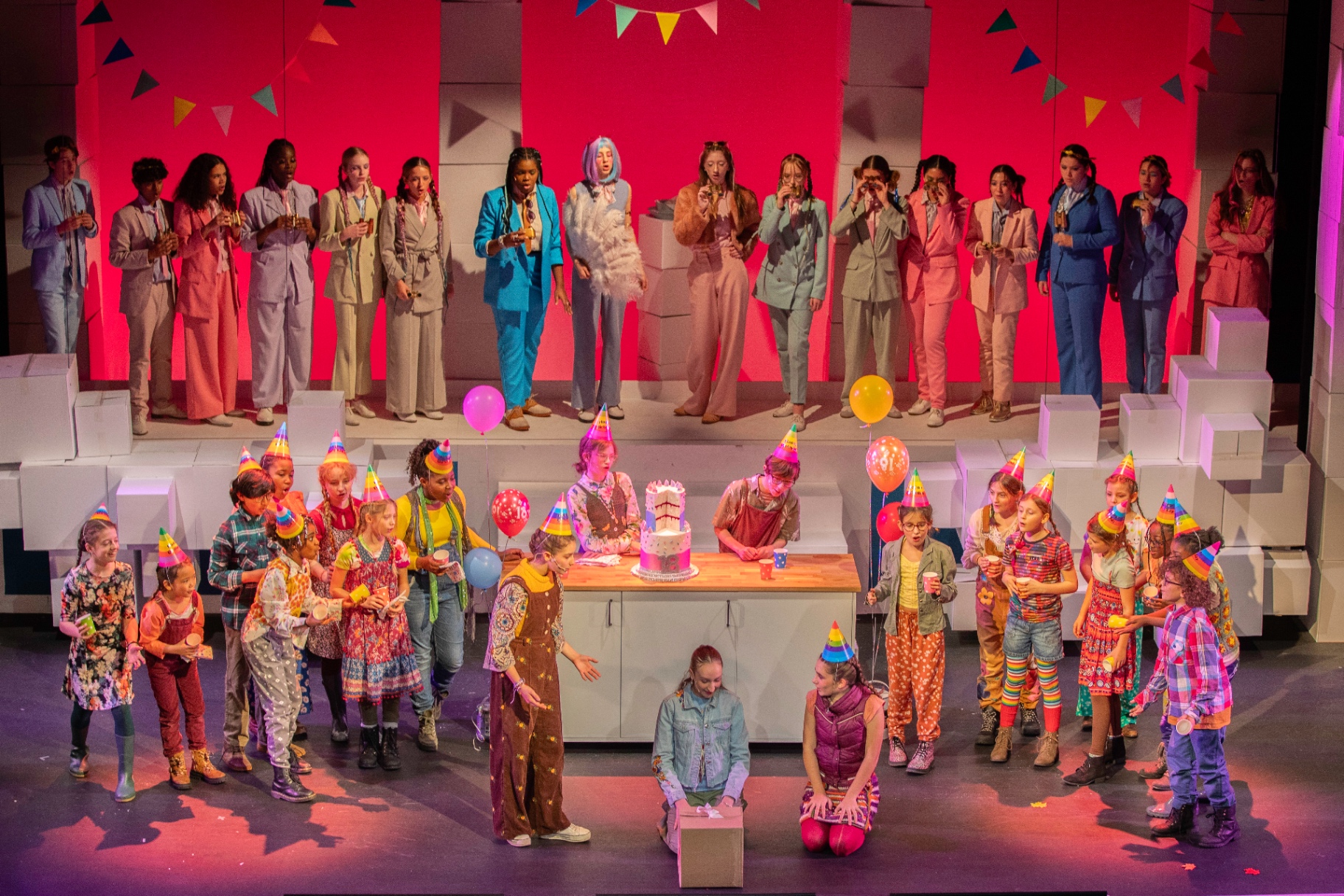
At London Youth Opera, the chorus isn't the background. It is the principal character.
Every commission we produce is built around the company as a whole. While individual roles and solo moments are important, it is the chorus that gives each production its scale, energy and emotional impact. The most successful commissions embrace this from the very beginning, writing the chorus into the heart of the storytelling rather than around the edges. It is quite honestly what defines the success of London Youth Opera.
Think Beyond One Voice
One of the most common misconceptions is treating the chorus as a single voice.
The chorus is not simply the company divided into equal vocal parts. It is a set of distinct communities, each with its own dramatic identity, purpose and perspective on the story. This may sound obvious, but if not clearly designed, our cast can lose interest. We need every cast member invested in the story-telling throughout.
Chorus groups can argue with each other, celebrate together, divide into opposing camps, observe the action or step into it. Like any principal character, they should grow and change as the drama unfolds.
Chorus Groups as Communities
The most successful commissions treat each chorus group as its own small world.
In our experience, groups of roughly 9–15 performers often work best. Groups of this size are large enough to feel like a genuine community on stage, and small enough to remain manageable in rehearsal and give each performer a real sense of place within it.
Give each group a name, a role in the story and a point of view. The stronger those identities become, the richer the world of the opera becomes.
Give Everyone a Place
Every performer should feel they have a meaningful place within the story.
This doesn't mean giving everyone a solo. It means giving everyone an identity — and, wherever possible, a small individual moment they can call their own.
Even a single line, a short exchange or a brief solo phrase can give a chorus member genuine ownership of the story. These small moments are often the most rewarding parts of the process for young performers, and they always add to the drama.
Think About the Stage
Writing for 50–80 performers isn't simply a musical challenge - it's a theatrical one. You should see our sign-in/sign-out sheets for rehearsals!
How does the chorus enter?
How do different groups move through the space?
Is there time for them to leave before an intimate duet?
Can two communities share the stage without distracting from the main action?
The best chorus writing considers movement and staging from the very beginning, not just the notes on the page.
Bringing Everyone Together
The full company should feel like an event.
At the very least, we encourage bringing the whole cast together at the beginning and the end of the opera. Many successful commissions also include a major central ensemble that unites the company at an important dramatic moment.
When the entire company shares the stage, it should always feel earned.
The format of a London Youth Opera commission is quite specific. We want the whole company to feel ownership of the piece, not simply appear at the beginning and end. When the chorus is written as another principal character, the rewards become obvious in performance.
Questions to Ask Yourself
- 01
Does the chorus influence the drama, or simply comment on it?
- 02
Does every performer have an identity?
- 03
Can different chorus groups interact or oppose one another?
- 04
Have you thought about how 50–80 performers move through the space?
- 05
Are the biggest ensemble moments saved for the biggest dramatic moments?